The month of October each year is dedicated to the Most Holy Rosary. This is primarily due to the fact that the liturgical feast of Our Lady of the Rosary is celebrated annually on October 7.
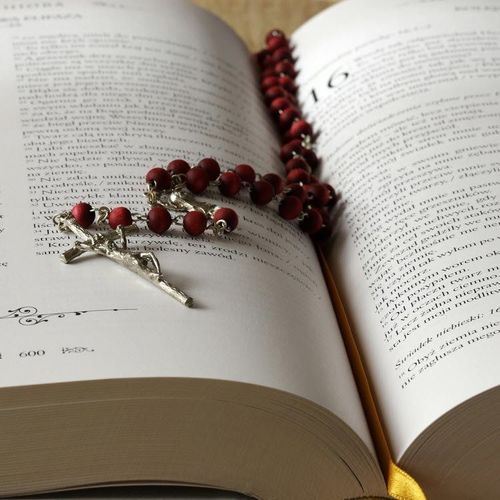
According to an account by fifteenth-century Dominican, Alan de la Roch, Mary appeared to St. Dominic in 1206 after he had been praying and doing severe penances because of his lack of success in combating the Albigensian heresy. Mary praised him for his valiant fight against the heretics and then gave him the Rosary as a mighty weapon, explained its uses and efficacy, and told him to preach it to others.
Since the prayers of the Rosary come from such excellent sources - from Our Lord Himself, from inspired Scripture, and from the Church - it is not surprising that the Rosary is so dear to our Blessed Mother and so powerful with heaven. In the twelfth century, religious orders recited together the 150 Psalms as a way to mark the hours of the day and the days of the week. Those people who didn't know how to read wanted to share in this practice, so praying on a string of 150 beads or knots began as a parallel to praying the psalms. It was a way that the illiterate could remember the Lord and his mother throughout the day.
Saying the rosary involves prayers and meditation on specific mysteries of the Catholic faith. Here’s a step-by-step guide:
A rosary (a string of beads with a crucifix and five sets of ten beads) A quiet place for prayer
You can include the Rosary's special prayers at the end, such as the St. Michael prayer or others.
